As part of a project promoting the activities of the Laboratory for Media Studies at the University of Warsaw (LBM UW), a series of educational visits was organized for high school students. The goal was to introduce them to the applications of biometric technologies in scientific research and to demonstrate that science can be accessible, engaging, and relevant to everyday life.
At the end of each visit, participants completed an evaluation survey. Here is what we learned from their responses.
General assessment of the visit: 91% positive feedback
In response to the question "How would you rate the visit on a scale from 1 to 5?", 47.4% of students chose “very good”, and 43.6% – “good”. This means that more than 91% of participants found the event successful. Only 2.6% rated it negatively (“poor” or “very poor”), indicating that the format was well-suited to the expectations and needs of the audience.
Technology sparked the most interest
When asked what they found most interesting during the visit, participants most frequently indicated:
- Presentation of biometric equipment (41%)
- Hands-on experience with technology (31.9%)
- Information about scientific research (27.1%)
This confirms that young people value real interaction with technology – things they can see, touch, and test themselves. Combining theory with hands-on experience proved to be key to building engagement.
Greater awareness of biometrics in science
Over 84% of participants declared that after the visit, they better understand how biometrics is used in scientific research. Only 4% responded “no,” and 11.2% chose “hard to say.” This result demonstrates the strong educational impact of the event, especially considering that the subject matter was new to many attendees.
Openness to further engagement with science
In response to whether they would like to attend similar events in the future:
- 78.7% said “yes”
- 17.7% – “maybe”
- 3.6% – “no”
This is a clear signal that such initiatives are needed and can effectively spark young people’s interest in scientific and technological topics.
Students' interest in modern technologies
When asked which areas of emerging technologies interest them most, students most often chose:
- Artificial intelligence and machine learning – 21.1%
- Biometrics and tracking technologies – 19.1%
- Virtual and augmented reality – 18.3%
- Cybersecurity and privacy – 15.7%
- Medical technologies and bioengineering – 14.7%
- Automation and robotics – 11.2%
This distribution reflects the diverse and thoughtful interests of the younger generation, reaching beyond the most frequently discussed trends in popular media.
The presenter was rated exceptionally well
When asked “How would you rate the way the visit was conducted by the presenter?”, 98% of participants selected “very good” and the remaining 2% – “good.” This was one of the highest scores in the entire survey and confirms the presenter's ability to effectively engage with a young audience.
Summary: science that works
The results of the survey show that a well-designed science outreach event can have a real impact on how young people perceive research and modern technologies. Visits to LBM UW not only broaden knowledge, but also build trust in science, stimulate curiosity, and show that research can be understandable and inspiring.
For us, this is a clear signal that science communication in a “for the people” format not only makes sense – it is essential.
If you want to learn more about how GSR sensors, eye tracking, or facial expression analysis work – stay with us. More blog posts are coming soon.
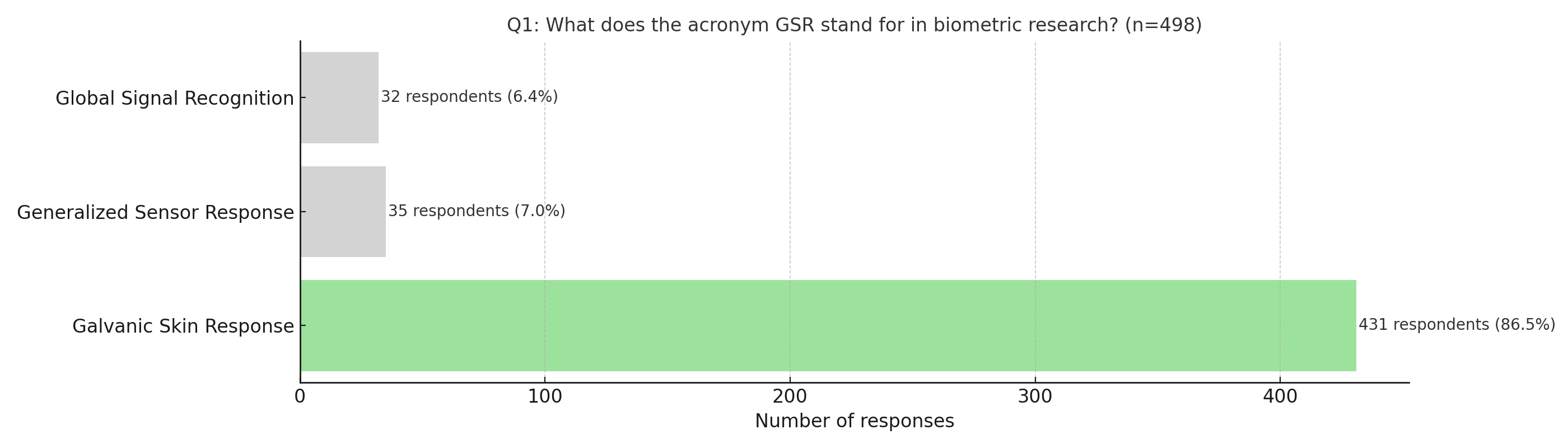
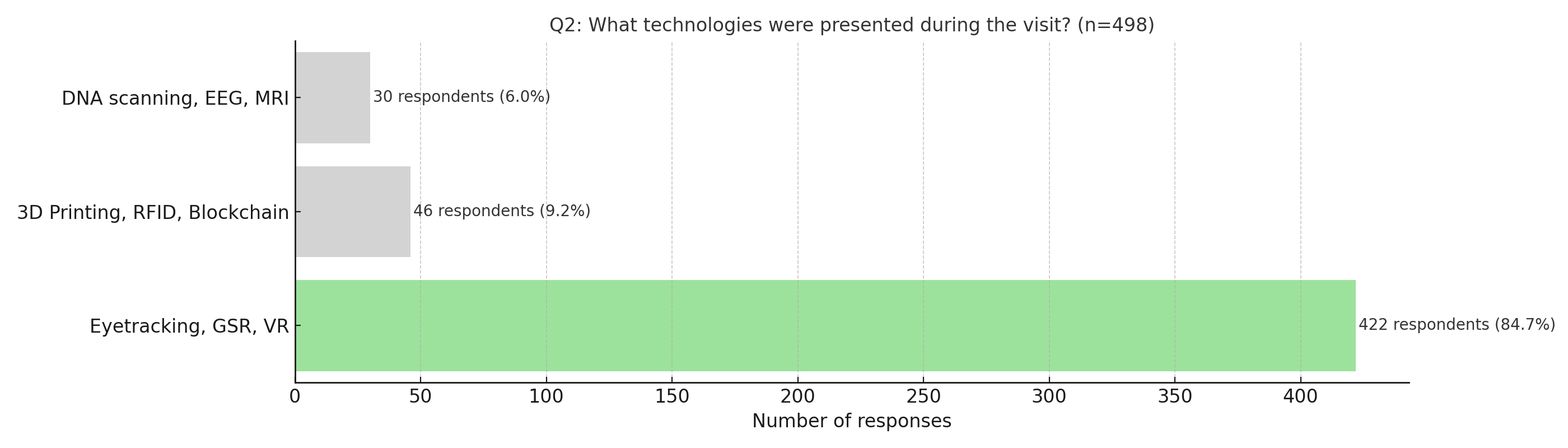
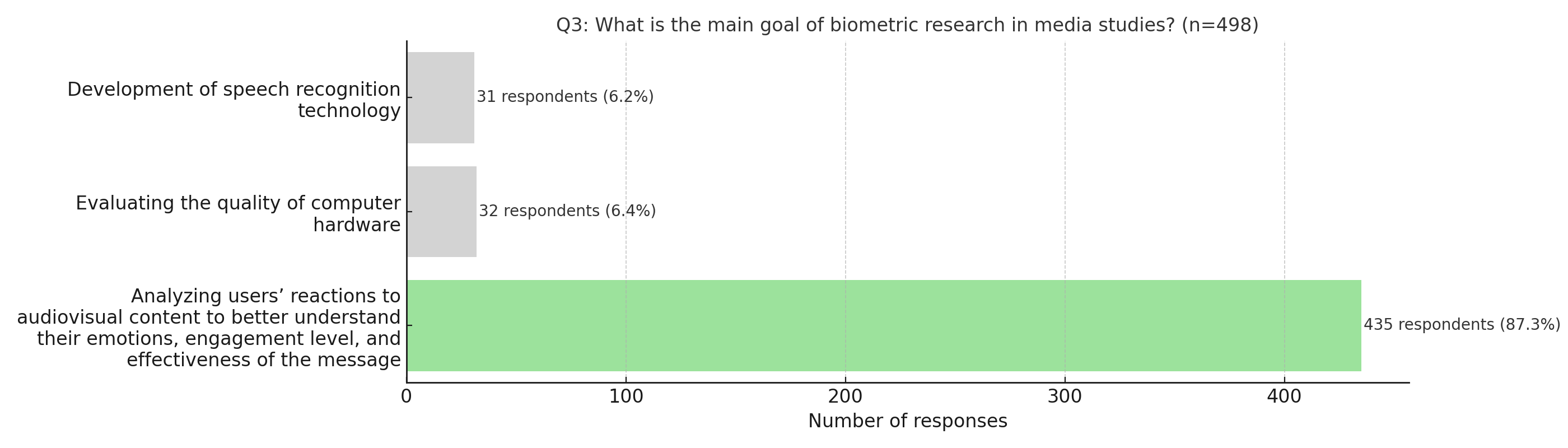
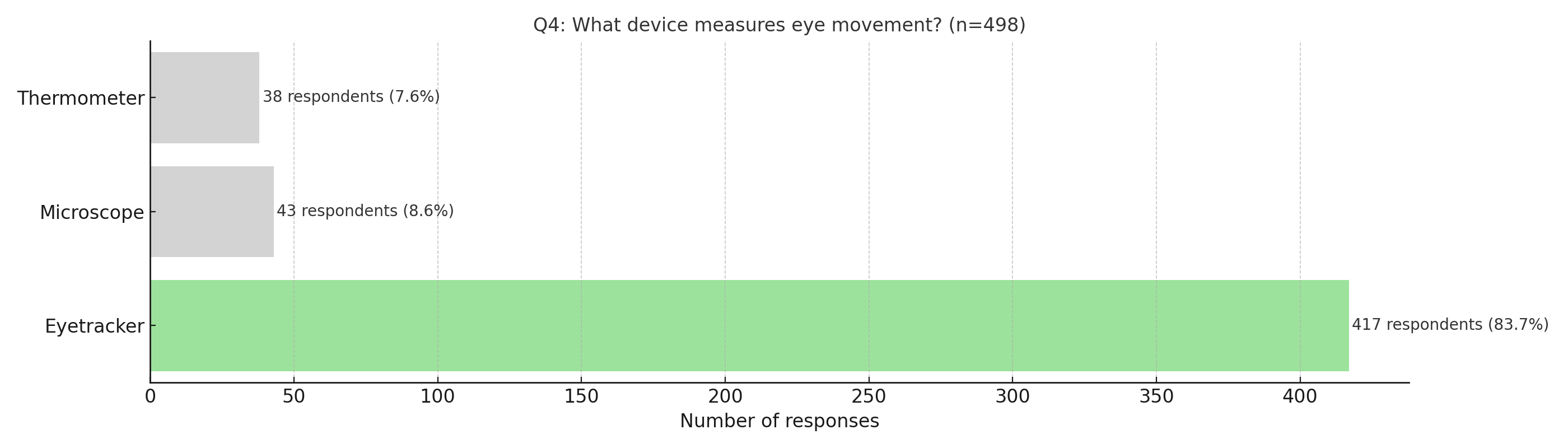
Evaluation Survey Results


Knowledge Test Results